
SAY CHEESE
My visit to California's first goat farm, its cheeses, Richard Olney and Domaine Tempier, pizza with fried eggs and truffles in Asti, and toasted Raclette in front of a fire with very cold Aquavite.

I am not sure why Eggs & Cheese are paired in the same cookbook chapter.
I know that with my first cookbookin 1985, my editor told me to pair them. Now I would not pay so much attention to that directive without thinking more about it.
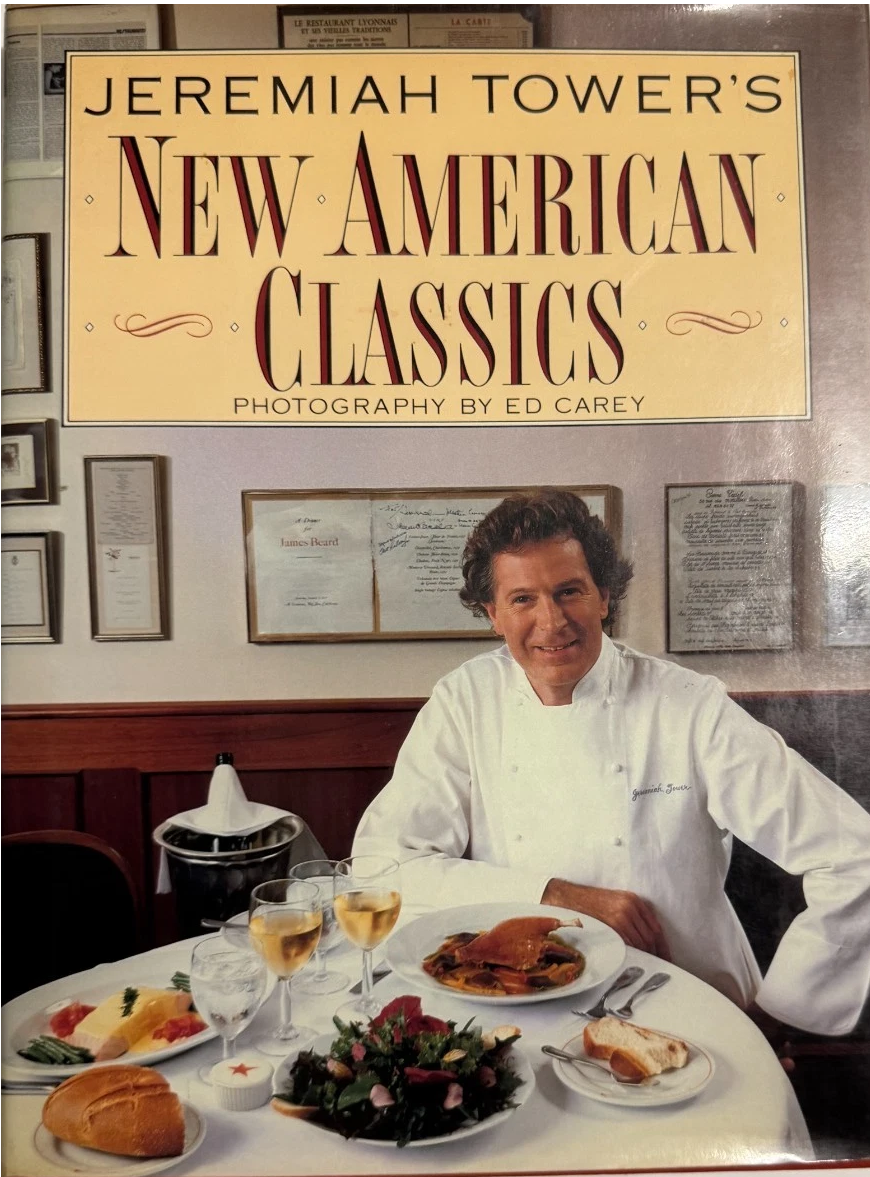
Is it all about farms? With their eggs, butter, and cheese.
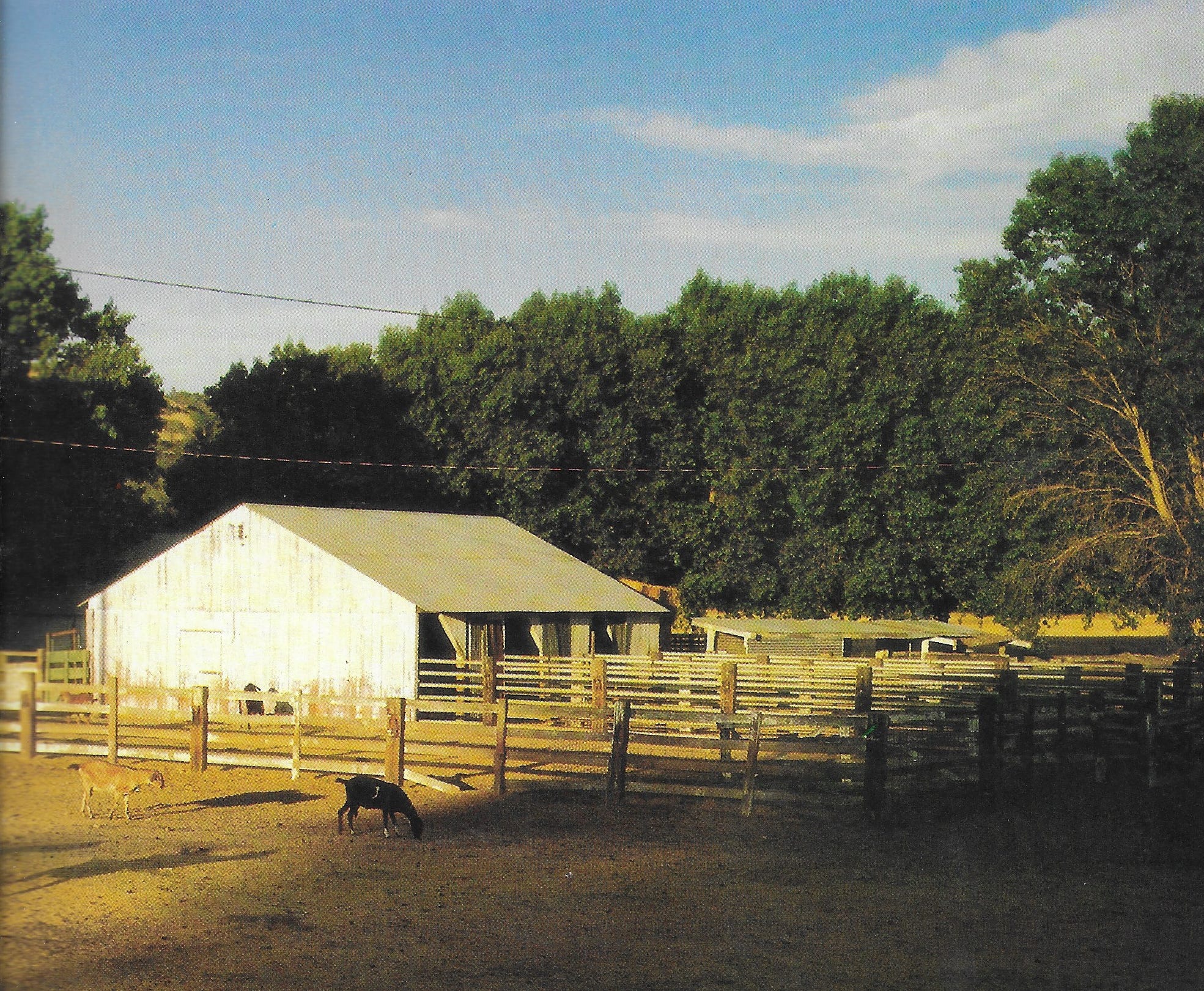
Image: JT
This week I am writing mostly about cheese. Next week mostly eggs. With my friend Anthony Bourdain weighing in with his dislike of brunch but love of eggs. As we often said to culinary students while on tour for our dcummentary about me, The Last Magnificent, if you can cook a great omelet, then can cook.
I used to hate eggs as a child, as I sat at the breakfast table and watched the adults wolf down fried eggs with uncooked whites hanging from their forks. Nothing filled me with greater dread than the Sunday-morning trial by egg.
Then fried eggs in Italy were a revelation and new love.
One November I stood in the cold mist in the shadow of the castle of Asti’s Costigliole in great anticipation. Stamping impatiently in the cold like a thoroughbred waiting for its hot oat mash. The door opened and I walked to the top of the long steps leading down into the dining room. Even at the top of the steps the immediate aroma of white truffles didn’t so much hit me as envelope me like a cashmere blanket pulled around my shoulders.
Starting down the stairs into the underground vaults of the dining room, with each step down the air got thicker with truffles, and by the time I reached the bottom step I could have run my fingers though the thickening heady perfume
Within moments the truffles themselves showed up, first in a fonduta sauce enveloping hot cardoons, that wonderful artichoke-tasting vegetable in season in the wintery Piedmont.
That was a perfect evening.
But our minds were set on lunch the next day in Alba.
For pizza.
At the ristorante pizzeria Cincilla, our pizza covered with fried eggs and deep snowdrifts of white truffles on top of the eggs.
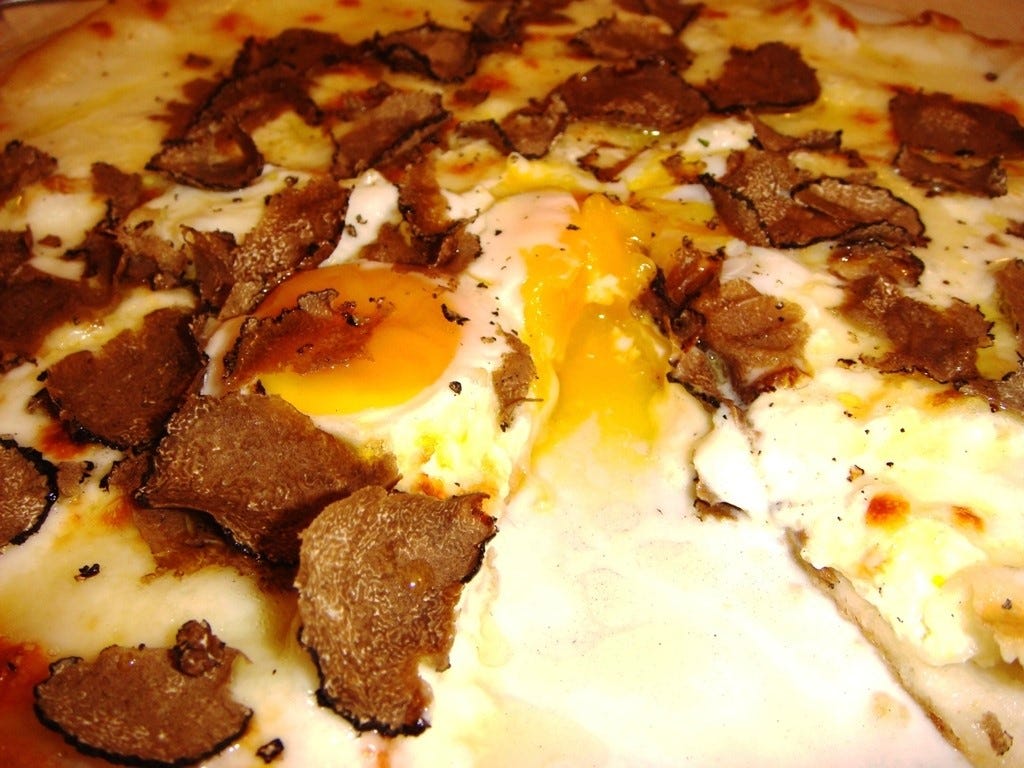
Image: JT
Not a word was spoken until half the pizzas (one big one each) were gone. There were several sighs however. And more sighs when the Barbaresco from Giacosa Fratelli was poured and the perfume hit our noses right behind that of the truffles.
Confirming Michelangelo’s “Bellezza e l’eliminazione di cio che e superfluo.”
Elimínate the superfluos and, like Escoffier, “keep it simple.”
As we did in the restaurant Il Falcone” back in Asti at nine that night. Their specialty was a platter of dozens of fresh and aged pork sausages and lardo, followed by a great cart of bolitto misto of tongue, cheeks, sausages, and three kinds of other boiled meats.
But we ordered light.
Merely a whole milk-raised kid roasted in the wood oven,
When I became a chef, let alone having to write about eggs. I realized how versatile eggs are, taking their place in dishes as massively complex as oeufs Careme, which takes a staff of five two days to make. Or as refined as the recipe from Le Cuisinier Royal of 1839 that calls for the pressed juices of twelve spit-roasted ducks to be poured over fifteen poached eggs. Or as simply cooked in a ramekin with cream.
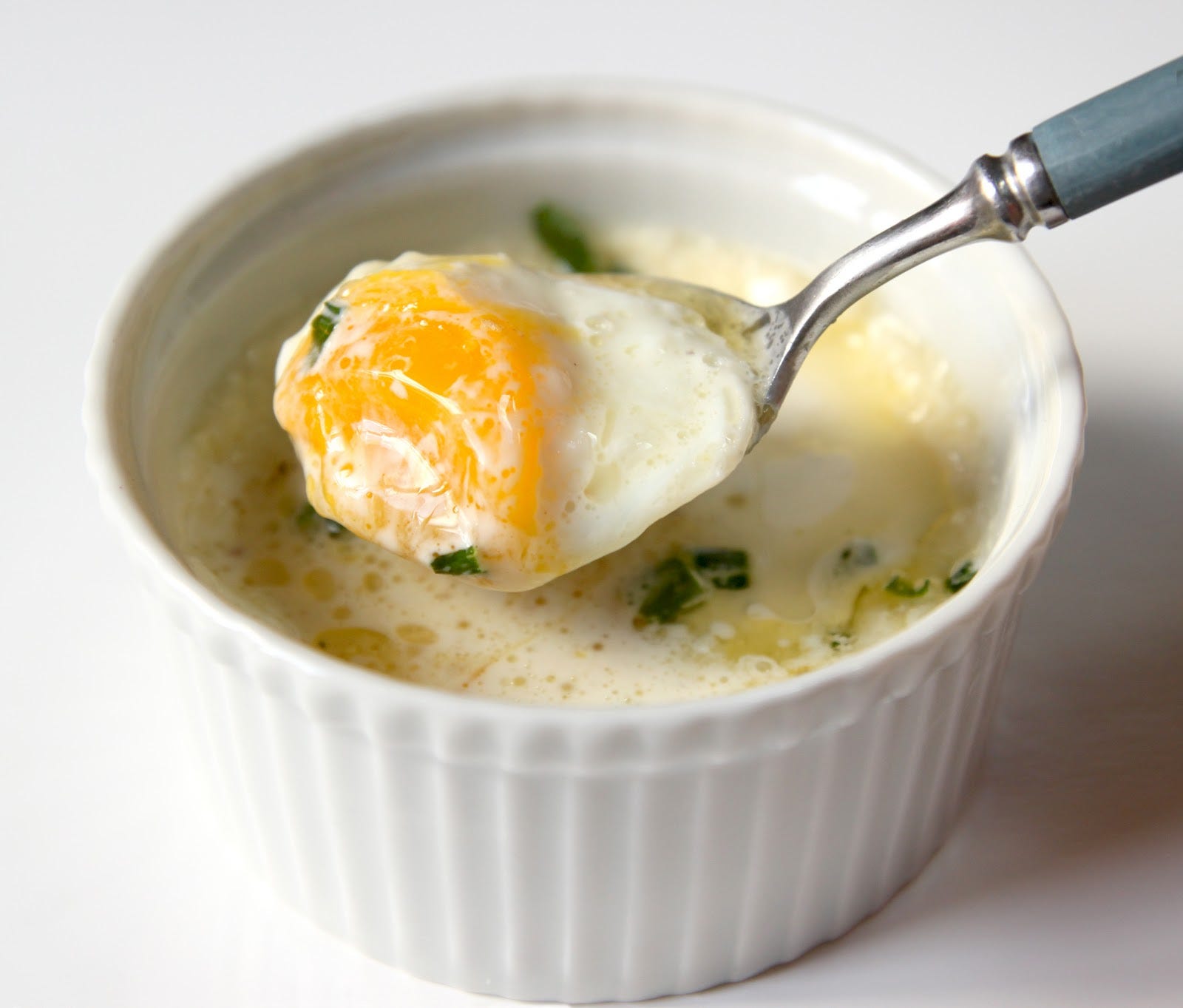
Image: La Cuisine de Bernard
One of the gifts of both eggs and cheeses is their perfection with very little work or time.
Not wanting to be a slave over the kitchen stove is nothing new. Just because grandmothers or their cook started baking pies at five in the morning does not mean she enjoyed it. In an 1878 Housewives’ Companion from Ohio, the dedication is “To the Plucky Housewives, who master their work instead of allowing it to master them.” When I see the richness and detail coming back into American food, and when I see that so much of it involves women professionally like my early contact (Chez Panisse days) with Sadie Kendall and her goat farm in Atascadero, California.
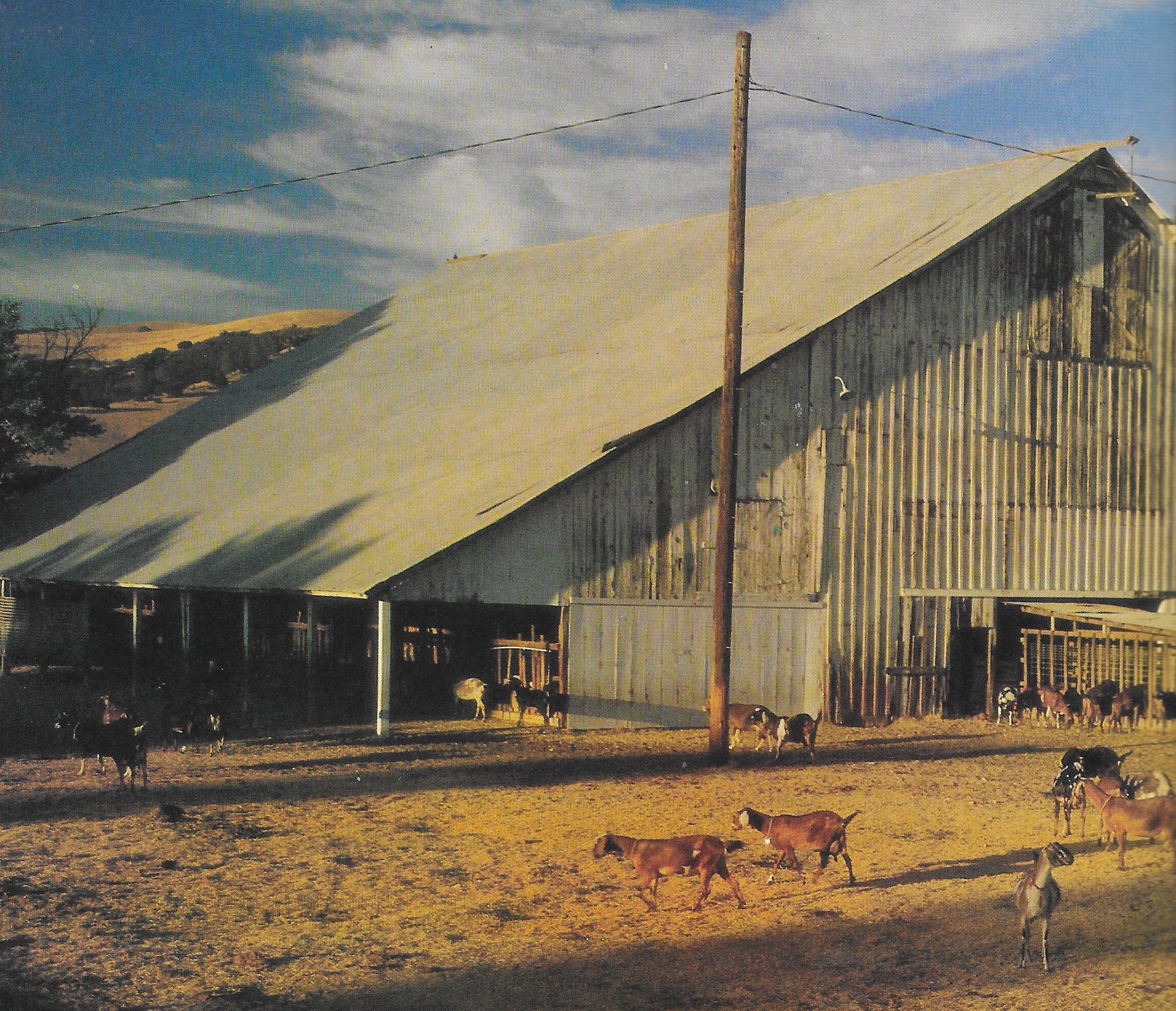
Image: JT
Seeing that farm in operation I was reminded that the first professional cooks in America were women. It was they who cooked from sunup to sundown, and the sensual richness they brought to the food of nineteenth-century America is something we are trying to recapture now. The great tradition in any bountiful rural area, and especially in the Middle West, of the groaning board, the harvest dinner, the hospitality of the farm, is something to look to, not merely out of nostalgia, but because they ate well, healthfully, and simply.
Farms mean to me eggs, butter, and cream. The cream to be as rich as possible-whether the sublime Jersey, Devon, or Guernsey cream of England.
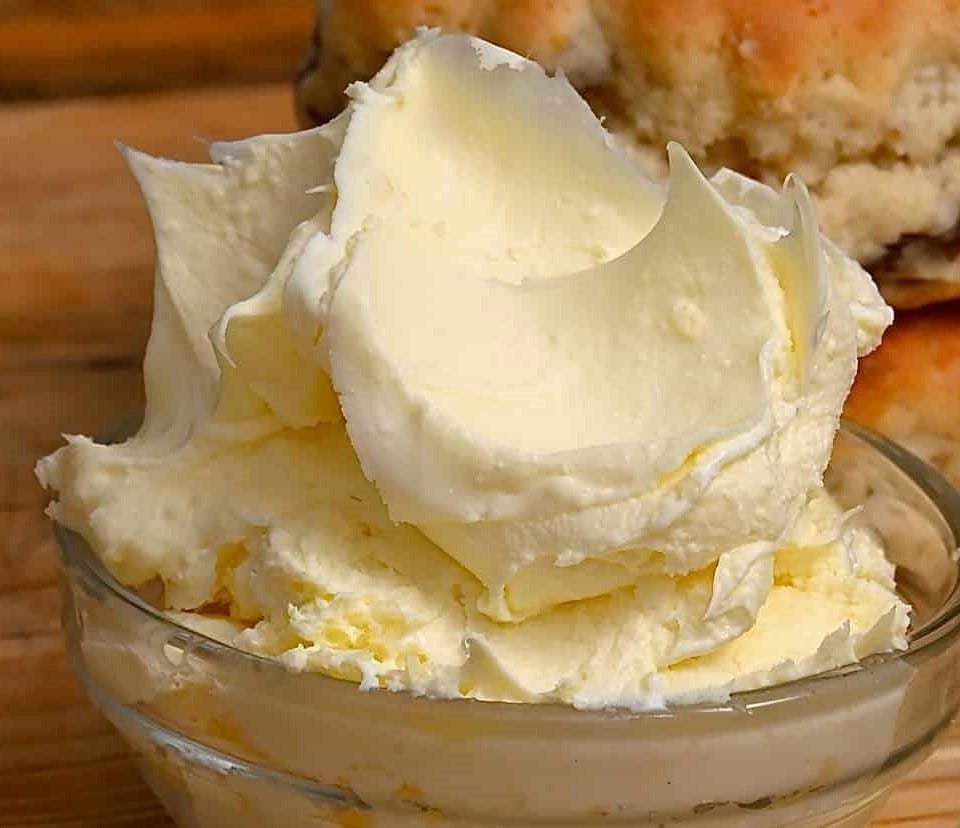
Which I have by the spoonful whenever I am back there. Or the mascarpone of Italy, eaten with wild strawberries or raspberries. But with cheese I like it fairly austere. Which is why I highlight goat cheese here. There have always been goats around somewhere throughout my life. In Mexico, my parents had Nubians the color of Irish setters. In England, I had twins that were pure white and ate themselves practically out of the county. At my Prides Crossing farm in Manchester, Massachusetts, our Australian fainting goats produced milk but would keel over in a dead faint at the sight of a milking pail.
In California, I tried to use the first goat cheeses that were imported (about 1973), but they had been wrapped in plastic and been on the shelf too long, since no one was buying them in those days. But when fresh from the farm gast cheeses appeared, I put them in the center of a mixed garden greens salad with walnut oil and was able to sell them, starting a movement that culminated in a craze for goat cheese. Crottin de Chavignol with a little age is the aristocrat of goat cheese for me, but fresh goat cheese has its place. In Burgundy, the fresh cheese is formed in pyramid molds after hanging in cloth to get ride of the liquid whey.
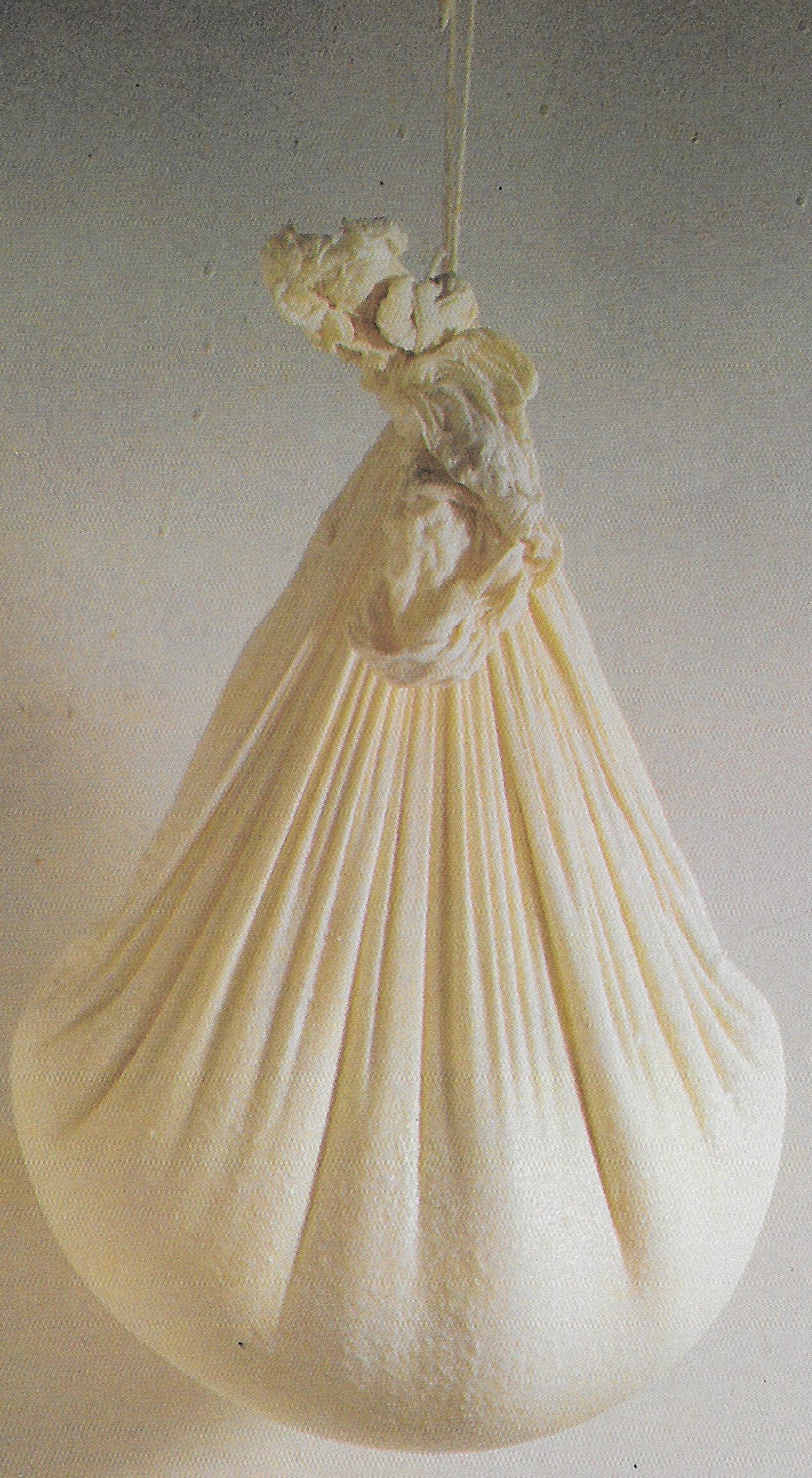
Image: JT
And served either as a cheese course with crème fraiche, salt, and pepper, a first course as here of baked garlic and olives, or as a sweet course with wild strawberries and berry puree.
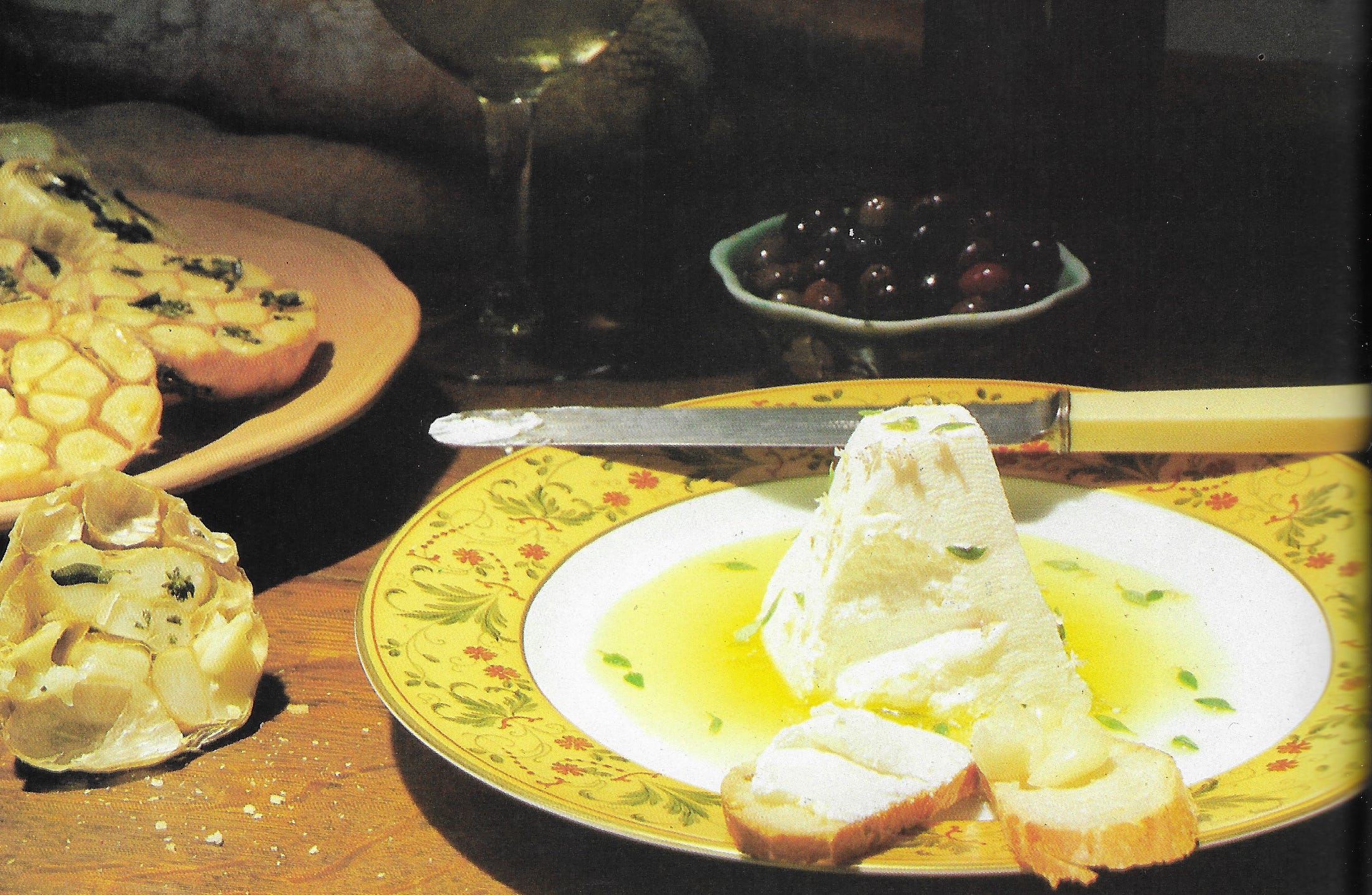
Image: JT
If you buy cheeses that are wrapped in plastic, immediately remove the wrapping and let the cheeses dry off. The best place for keeping cheeses is a very slightly damp, cellar-temperature place, free of insects, with some air circulation. In Richard Olney’s house, nestled in the hillside in the south of France, there was a little cave off the kitchen with his cheese storage box, which over the years had accumulated a family of cultures.
One day after placing a day-old goat cheese there, I could see the cream-colored folds of mold starting to form. It became an education to try and match which day the cheese was at its peak in relation to the wine we were going to have with it. In those early days Richard would pull from the cellar a La Migoua from Domaine Tempier in Bandol. We would and sit out the terrace under the grape arbor in the late summer afternoon with the wine, grilled country bread, salt, olives, rich butter, and a selection of week-old goat cheeses of different shapes.
A time to make time stand still.
In Atascadero, I talked to Sadie Kendall, while standing in the aging room of her goat farm.
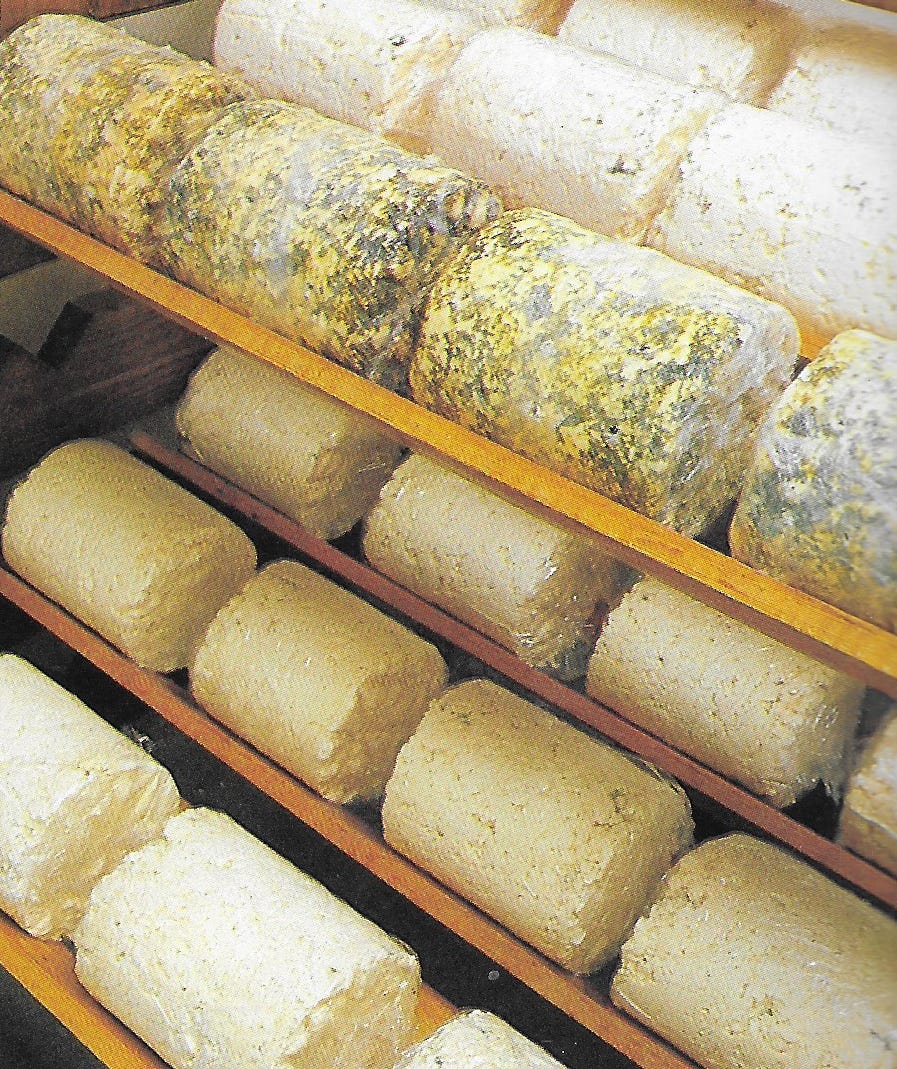
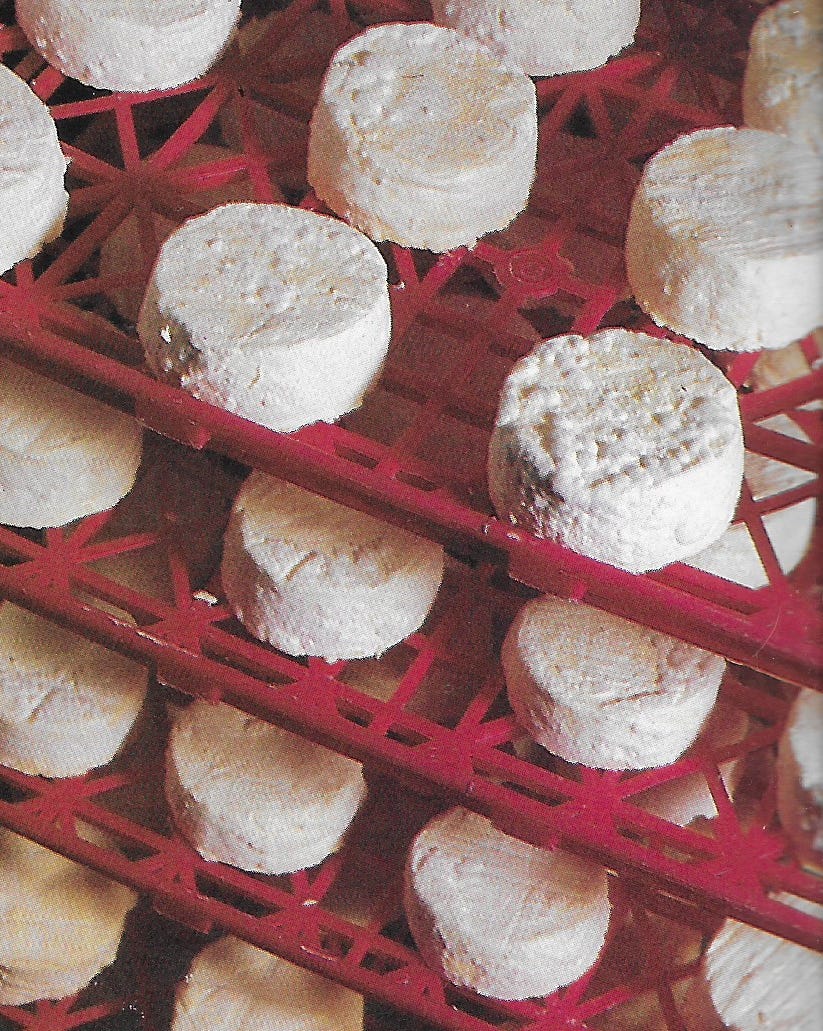
Images: JT
The two of us surrounded by racks of almost pulsating living cheeses, and talkg about they why the same curd, made into different shapes, has different tastes. Something to do with the mass and volume of the shape in relation to the number of bacteria in the cheese
Grilled Goat Cheese in Vine Leaves
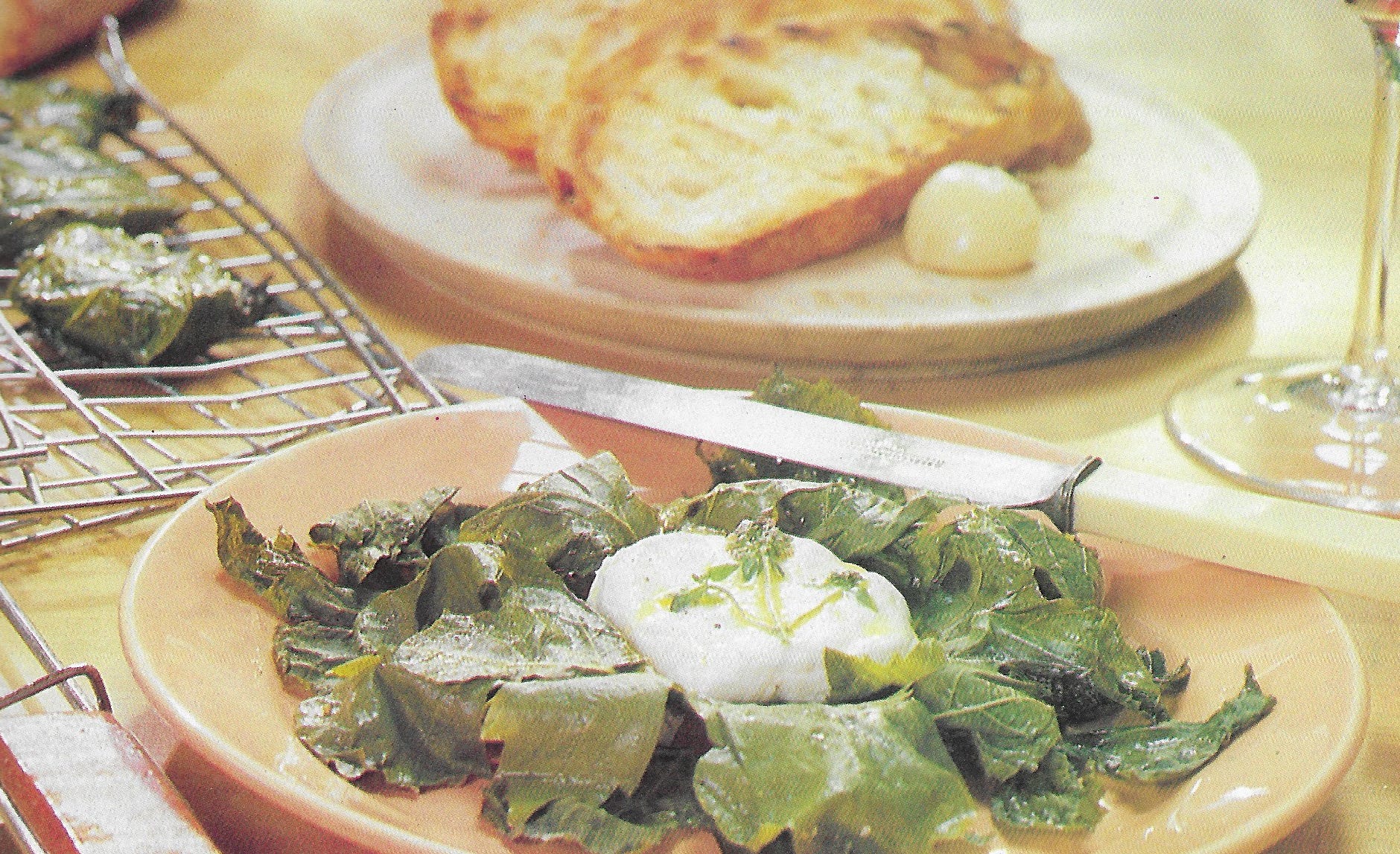
Image: JT
The best equipment for grilling these wrapped cheeses is a hinged grill- a good cheap investment because it makes grilling anything easier, and makes turning things, like little fish, mushrooms, bread, or vegetables, a snap. Wonderful for grilling flattened-out little birds, sliced green tomatoes, or thick slices of Parmesan cheese marinated in fresh thyme or sage.
Set up the hinged grill on top of another grill, or if you are cooking in your fireplace, build up a few bricks to support the grill, take out some coals, and set the grill on the bricks.
Serves 4
4 grape leaves
4 leaves radicchio
8 2-inch rounds fresh goat cheese
1 tablespoon thyme leaves, finely chopped
1 cup olive oil
12 slices country bread, 1/8 inch thick
1 clove garlic, peeled
salt and freshly ground pepper
Cut the stems from the grape leaves. Cut the thick cores from the bottoms of the radicchio leaves.
Put 4 of the goat cheese rounds in the center of the grape leaves and 4 in the radicchio leaves. Sprinkle each round with thyme and 1 ½ teaspoons of the olive oil. Fold the leaves over the cheese and turn the packages over so that the leaves stay closed.
Brush the outside of the cheeses with ¼ cup of the olive oil and marinate for 2 hours.
Start the fire or heat the grill.
Brush the bread with ¼ cup olive oil. Put the cheeses on the grill and cook over medium heat for 4 minutes on each side, until the goat cheese is soft and warm. Some color on the edges of the leaves is inevitable, but do not let the leaves burn.
When the packages are cooked, put them on a hot platter and grill the bread lightly on each side, then rub the bread with the garlic clove.
Serve the bread at once with the cheese. To eat it, spread the cheese on the bread and season with salt, pepper, and the remaining olive oil. Eat the radicchio but discard the grape leaves.
Or stuff Squash Blossoms with the cheese, heat, sauce with tomatoes, olive oil, and herb mayonnaise.
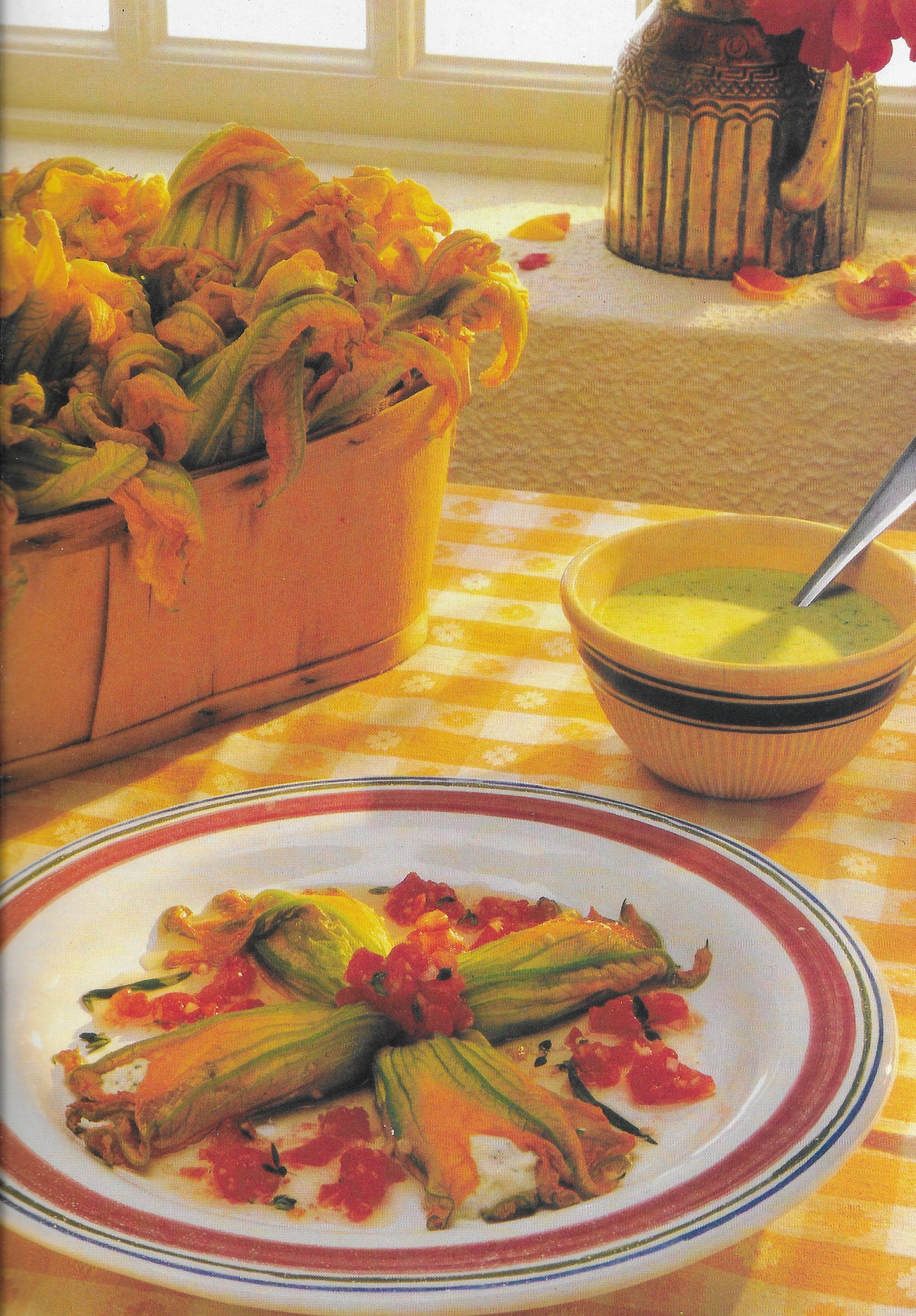
Image: JT
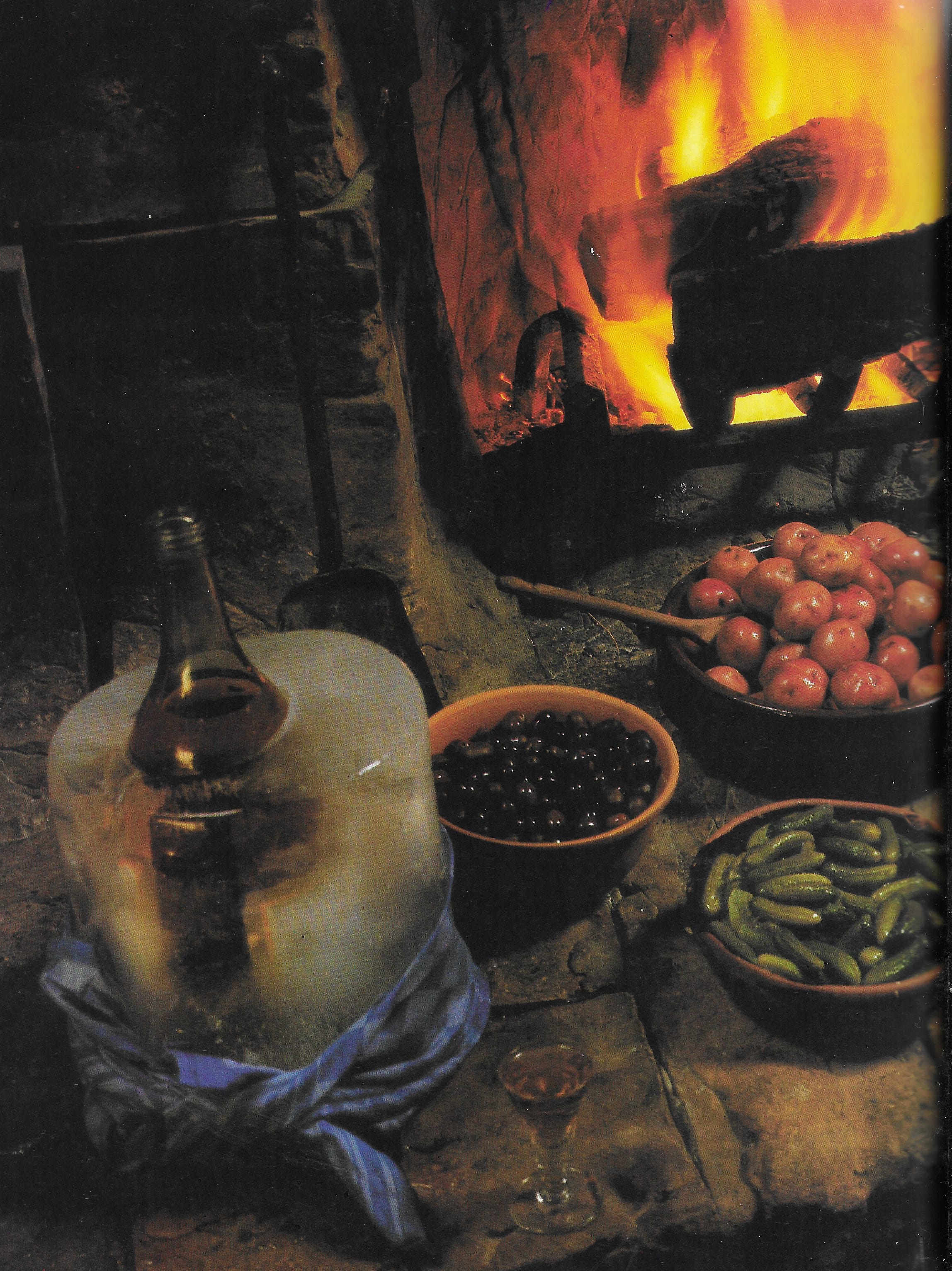
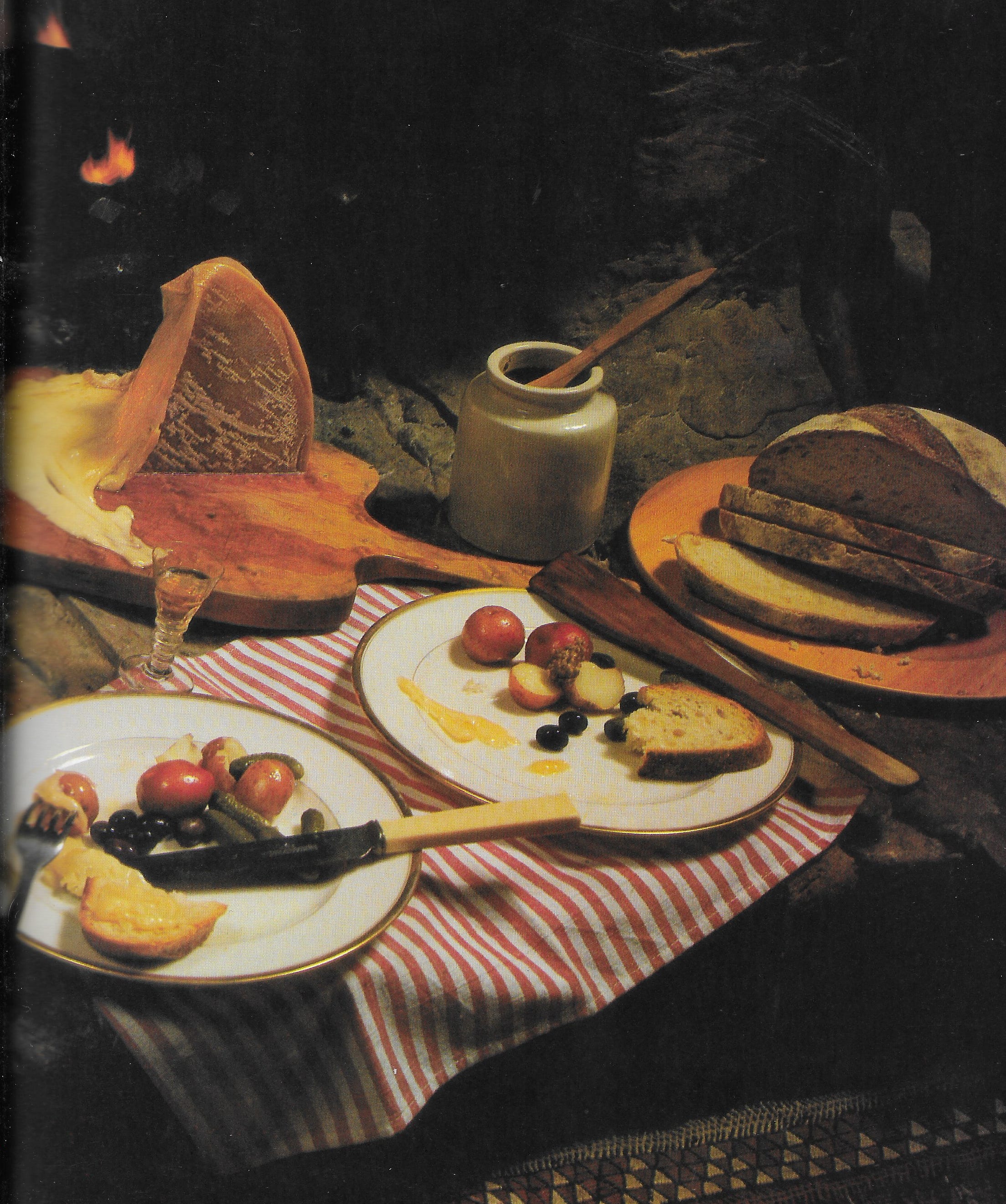
And in the winter, Raclette in front of a fire.
Images: JT
A crashing storm outside, frozen vodka, good small potatoes, and the fire-roasted crisp crust of the raclette melting in the heat of the flames.
Or a great aged Stilton
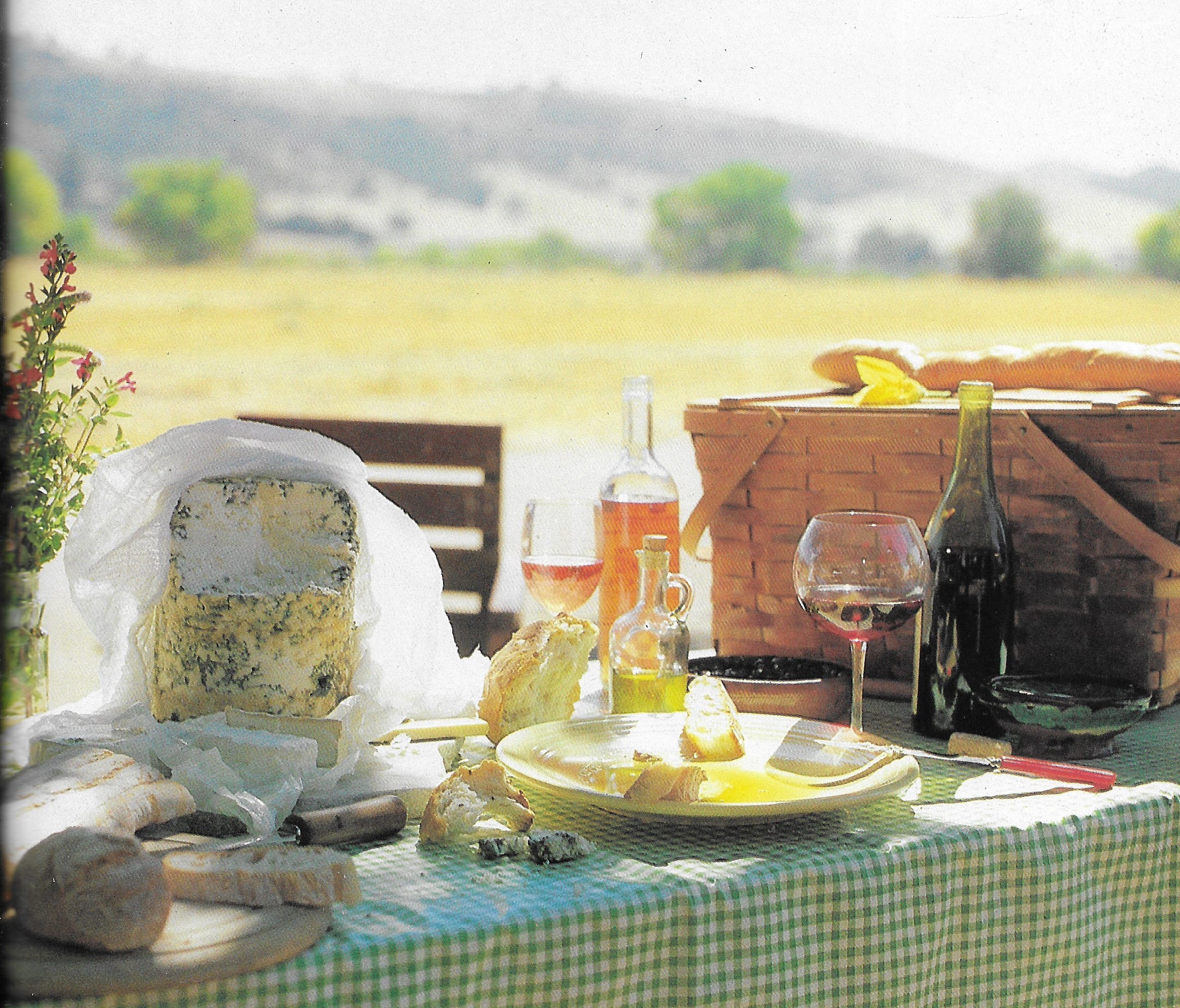
Image: JT
Wrapped majestically in a cheesecloth, the top of the cheese cut off so that you can see the crust giving way to the old marble yellowing, that color moving into the off-white and blue veins at the center of the cheese. Stilton and port, of course. Walnuts are traditional, but try undyed pistachios heated in their shells in the oven for ten minutes. An idea given to me by Belle and Barney Rhodes of Martha’s Vineyard and Bella Oaks in Napa Valley.
Thank you for reading JEREMIAH TOWER’S OUT OF THE OVEN! Free subscribers will receive an occasional publication. Paid subscribers will receive a weekly publication, as well as menus, recipes and full access to archives. Now including over 150 articles, and growing. I hope you like it!
All the more for you indeed. But you had the wonderful Rias Baixas wines of Galicia, and that world class seafood. Not bad.
And thank you, Frank. Our great privilege in knowing Olney!